
Everything you Need
To Verify and Control
Oregon Identity
Documents
Our printed I.D. Checking Guides and online versions are used by
DMVs, government agencies at all levels, and businesses.
Check Oregon Drivers Licenses & IDs

Why ID Checking in Oregon Takes a Trained Eye
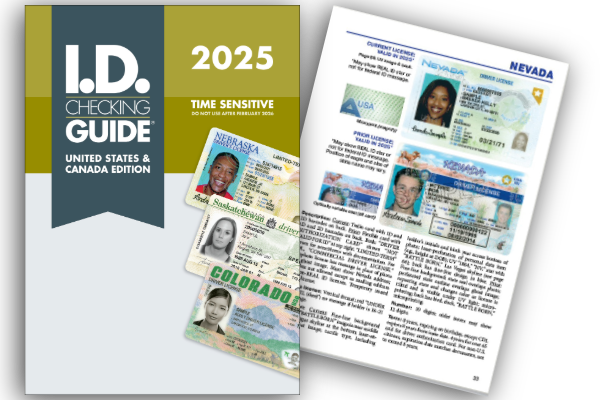
An Oregon fake ID rarely survives a careful comparison against the real design. Every Oregon server, cashier, and officer eventually faces the same question: is this card real? The fastest way to spot a fake is to know the genuine design in detail. The I.D. Checking Guide (U.S. & Canada) shows Oregon driver's licenses in full color and actual size. It covers every U.S. state, U.S. territory, and all Canadian provinces and territories in the same format.
Read More
Oregon's geography keeps verifiers busy. Portland sits across the Columbia River from Vancouver, Washington, and Oregon's lack of a sales tax brings Washington shoppers south every day. Brewery taprooms in Bend, recreational cannabis dispensaries, and tribal casinos such as Spirit Mountain and Chinook Winds all admit only adults 21 and over on the gaming floor. Each of these places relies on accurate ID verification to confirm the ID corresponds to the person at the door.
What the I.D. Checking Guide Shows
A fake ID usually fails on details a quick glance misses. The guide lays out those details for Oregon licenses and ID cards, so staff know exactly where to look.
Staff can see where each element belongs on the card and how tall the printed text should be. They can confirm the length and mix of characters in the license number, and see how the REAL ID star marking differs from a standard-issue card. The guide also documents Oregon's security features, including the ghost image, microprinting, and the patterns that appear under UV light.
Oregon DMV mails the permanent card after an office visit and issues a paper interim credential in the meantime. Staff who know what both look like are less likely to turn away a valid customer or accept a questionable one.
Three Kinds of Fake IDs Oregon Verifiers See
Someone else's genuine card. A 19-year-old borrows a license from an older cousin, or picks up one that was lost or stolen. Every security feature passes because the card is real. Only a careful comparison of the photo and physical description reveals the mismatch.
Altered genuine cards. The card started out legitimate, and then someone changed it. A birth year may be scraped and reprinted, or an expiration date bleached and overwritten. Watch for characters that sit slightly off their baseline, mismatched fonts, or a ghost image that no longer lines up with the rest of the card.
Counterfeit cards. Look-alike forgeries are built from scratch on unapproved materials. They often have incorrect card flexibility and feel wrong in the hand. Under UV light, the expected patterns may be missing or blurred. Side by side with the reference, text sizing, spacing, and security graphics tend to be slightly off.
Industries That Depend on ID Verification
Law Enforcement and Public Safety
Troopers and deputies working I-5 and I-84 handle licenses from every Western state. When a driver presents an Idaho or Nevada card, a reference lets the officer confirm the format at the roadside instead of relying on memory.
Financial Institutions and Transaction Services
Banks and credit unions in the Portland metro area regularly serve customers who live in Washington. Opening accounts, cashing checks, and approving loans all depend on confirming that the ID is authentic and belongs to the customer.
Alcohol Sales and Hospitality
The Oregon Liquor and Cannabis Commission (OLCC) requires alcohol servers to hold a service permit. Grocery stores, bottle shops, taprooms, and state liquor agents all make age decisions, often dozens per hour. Cannabis retailers face the same 21-and-over requirement under OLCC oversight. A dependable reference gives staff something concrete to check against when a card looks off.
Facility Access and Security
Data centers in Hillsboro and The Dalles, along with utilities and government offices, limit entry to approved personnel. Security staff check each visitor's ID against the access list before anyone passes the front desk.
Oregon Alcohol Laws at a Glance
Oregon treats a sale to anyone under 21 as a Class A misdemeanor. Mandatory minimum fines rise with each conviction, and a third conviction brings jail time. Servers need an OLCC permit. A business that serves a minor who later causes injury may face a civil claim under Oregon's dram shop statute. Oregon law also lets retailers recover losses from a minor who used a false ID. Careful ID checking at every sale is the most practical way to stay within these laws. The complete guidelines appear below.
How to Spot a Fake Oregon ID: A Five-Step Check
Run the same five checks on every card, even when the line is long.
- Hold the card next to the current Oregon design in the guide and compare layout and orientation
- Count the characters in the license number and check the format
- Read the expiration date and confirm the card is current
- Tilt the card to find the ghost image, and use UV light to confirm the hidden security features
- Look from the photo to the person, then check the physical description
Why Spotting Fake IDs Is Harder Than It Looks
Turnover in restaurants and retail means new employees start checking IDs on their first day. Washington and California cards look nothing like Oregon's. Friday nights in the Pearl District and game days at Autzen Stadium push lines out the door. Well-made fakes are designed to survive a two-second look. A printed reference at the register gives every employee the same standard, whatever their experience level.
Alcohol Sales & Service Guidelines for Oregon
- Minimum age to consume: 21 - Minimum age to serve: 18 - Minimum age to bartend: 18 - Server/seller alcohol training required.
Alcohol retailers have the statutory right to sue a minor who uses a false ID to purchase alcohol for any losses or fines suffered by the retailer as a result of the illegal sale.
A person under 21 may purchase alcoholic beverages as part of a law enforcement action.
Penalties for serving or selling to a minor: Selling, giving or otherwise making available alcohol to a minor (someone who is not yet 21 years of age) is a Class A misdemeanor. The provider of the alcohol will be cited into court and appear before a judge. If convicted, the court will impose at least a mandatory minimum sentence of:
- $ 350 fine for a first conviction.
- $1000 fine for a second conviction.
- $1000 fine and not less than 30 days imprisonment for a third or subsequent conviction.
The court may also require the violator to make restitution for any damages or may require community service. The violator will have a Class A misdemeanor criminal conviction on their record.
In addition, if you provided alcohol to a minor, and that minor causes injury or damage, you might be sued under Oregon's civil "dram shop" statute.


Oregon Fake ID FAQs
Which physical features should I check first on an Oregon license?
Start with the layout and the expiration date. If those pass, move on to the ghost image and other security features, then the photo.
What does UV light reveal on an Oregon ID?
Genuine cards carry security features that appear only under ultraviolet light. Counterfeits often leave them out or reproduce them poorly.
How can I tell if a REAL ID card is genuine?
Confirm the REAL ID marking appears where the guide shows it. Then check the rest of the card's security features the same way you would on any license.
How should I handle a paper interim credential?
Compare it with the example in the guide. Then follow your organization's policy and Oregon laws on accepting temporary documents.
Do Washington and California IDs need a different check?
Yes. Each state uses its own layout and security design. Look up the issuing state in the guide before accepting the card.
Build Consistent ID Checking Into Every Shift
Staff who know what a genuine card looks like make faster, more accurate decisions. For more than 50 years, the I.D. Checking Guide (U.S. & Canada) has given verifiers a standardized reference for every U.S. state, U.S. territory, and all Canadian provinces and territories.
Order the I.D. Checking Guide and give every Oregon location the same standard for ID verification.
How to Spot a Fake Oregon ID
For law enforcement officers, bank tellers, car rental agents, human resources professionals and others who must verify ID in a professional capacity, the recent surge in fake IDs is challenging. The liability and losses that result from accepting a fake ID are large. The I.D. Checking Guide assists in the ID verification process by showing what an actual, valid ID looks like at full-size, and highlights the details of the licenses, making it much easier to spot the fraud. Before approving an expensive car rental, opening a new bank account or hiring a new employee, make sure the driver's license or ID card has the correct numbering, UV, microprint, ghost images, expiration, and other details that counterfeiters often miss.

Markets Served

Financial Services

Alcohol Control

Government

Law Enforcement
What the I.D. Checking Guide Includes:
- A full page or more for each U.S. state and Canadian province, showing driver's licenses and ID cards.
- Security image information for ghost images, laser perforation, microprint, UV and other validation details.
- Explanation of what the proper alphanumeric sequencing of an Oregon ID or Driver's License should be (how many letters, numbers, etc.).
- U.S. Federal documents including immigration, military ID, Visas and passport cards.
- "How to check driver's licenses" techniques for training.