Everything you Need
To Verify and Control
Oklahoma Identity
Documents
Our printed I.D. Checking Guides and online versions are used by
DMVs, government agencies at all levels, and businesses.
Check Oklahoma Drivers Licenses & IDs

ID Checks in Oklahoma Call for Accuracy and Confidence
Learning how to spot a fake Oklahoma ID starts with knowing exactly what a real one looks like. Across Oklahoma, cardholders are asked for ID thousands of times a day. It happens at Bricktown bars in Oklahoma City and at music venues in Tulsa's Blue Dome District. It happens near the University of Oklahoma in Norman and Oklahoma State in Stillwater, and at tribal casinos statewide. Oklahoma shares borders with Texas, Kansas, Arkansas, and Missouri, so staff regularly handle licenses from out of state. Military installations such as Fort Sill in Lawton and Tinker Air Force Base near Midwest City add IDs from around the country.
Read More
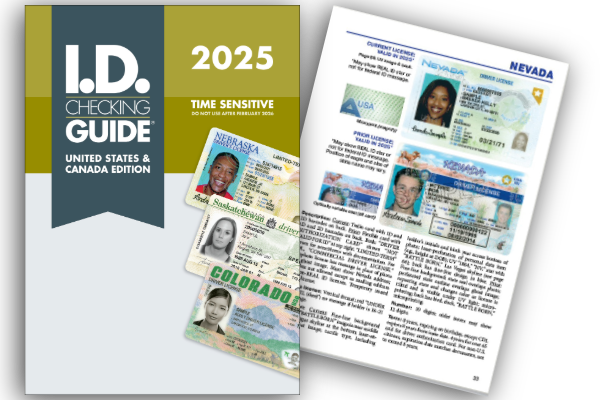
The I.D. Checking Guide (U.S. & Canada) gives verifiers one standardized reference for every U.S. state, U.S. territory, and all Canadian provinces and territories. When an Oklahoma card or other identity document lands on the counter, staff can compare it directly against the documented design. That helps them confirm the ID corresponds to the person holding it.
An accepted fake can mean an underage sale, a fraudulent account, or an unauthorized person inside a secure building. A dependable reference helps reduce each of those risks.
What the I.D. Checking Guide Helps You Verify in Oklahoma
State-issued credentials are issued through Service Oklahoma. They carry their own layout, numbering, and security design. The guide shows these cards in full color and actual size. It marks where each element should sit and how large the text should appear.
With that reference in hand, a verifier can check the card's orientation and confirm the license number has the correct number of letters and digits. They can check whether the expiration date follows Oklahoma's issuance pattern and identify the REAL ID configuration. Security items such as the ghost image and microprinting can be matched against the documented version. The photo and physical description can then be compared to the person at the counter.
Working from a documented standard, instead of memory, helps remove ambiguity. That matters most when an older design or an unfamiliar version comes through.
Types of Misrepresented Identification to Watch For
Some problem IDs are easy to catch. Many are not. Oklahoma verifiers commonly see three types.
Look-alike identification. The card is real, but it belongs to someone else, often an older sibling or friend with a similar build and hair color. The card itself passes inspection, so the check comes down to comparing the photo and physical description with the person presenting it.
Altered identification. A genuine Oklahoma card has been changed after issue. The date of birth or expiration date may be scraped, bleached, or overwritten. The edits can be subtle. Lining the card up against a reference image helps expose uneven text heights, misaligned characters, and damaged security graphics.
Borrowed identification. One valid card gets passed around a group. This shows up often in college towns on game weekends and at casino entrances. Staff who take time with the physical description are better positioned to catch it.
Stolen identification. A lost or stolen Oklahoma license can end up in the hands of someone who resembles the owner. Because the card itself is genuine, the security features will check out. The photo and physical description are what give it away.
Each type is easier to recognize when staff know how a genuine credential should look.
Where ID Verification Matters
Oklahoma employers in several sectors depend on accurate ID checks every day.
Law Enforcement and Public Safety
I-35, I-40, and I-44 carry heavy interstate traffic through Oklahoma. Officers stopping drivers on these corridors see licenses from across the country. A consistent reference helps them confirm identity at the roadside and move forward with accurate information.
Financial Institutions and Transaction Services
Tellers, loan officers, and check-cashing staff open accounts and release funds based on the ID in front of them. Confirming that the card is genuine, and that it belongs to the customer, helps block identity fraud before money leaves the building. Retailers face the same problem at the register, where a fake or stolen ID is often used alongside a stolen credit card to push through a large purchase.
Alcohol Sales and Hospitality
Since 2018, grocery and convenience stores in Oklahoma have been able to sell wine and strong beer. That expanded the number of cashiers making age decisions every shift. Bars, restaurants, and liquor stores face the same responsibility. A careful, repeatable ID check helps these businesses show good faith if a sale is ever questioned.
Facility Access and Security
Oklahoma's energy sector, utilities, and government sites restrict who can enter sensitive areas. Security officers at these checkpoints rely on identification to match each visitor or contractor to an approved access list.
Oklahoma Alcohol Sales and Service Laws
Oklahoma holds sellers and servers accountable for every alcohol sale to someone under 21. The state requires server and seller training. A first offense for furnishing alcohol to a minor is a misdemeanor, and a repeat offense becomes a felony. A business can also lose its license or permit. A documented, consistent ID process helps staff meet their obligations under Oklahoma laws and can lower the chance of a violation. Full details appear in the guidelines below.
How to Spot a Fake Oklahoma ID Step by Step
Following the same sequence on every check helps staff work faster and miss less.
- Match the card's layout and orientation to the current Oklahoma design in the guide
- Confirm the license number has the correct format and character count
- Check that the card has not expired
- Inspect the ghost image, microprinting, and other security features
- Compare the photo and physical description with the person presenting the card
Common Challenges When Verifying IDs
Even seasoned staff run into trouble. New hires may receive little formal training. Licenses from neighboring states look different from Oklahoma cards. Game days, concerts, and holiday weekends create long lines and pressure to hurry. Alterations are often too subtle to see without something to compare against. A reference that sits at the point of sale helps staff handle all of these situations with more consistency.
Alcohol Sales & Service Guidelines for Oklahoma
- Minimum age to consume: 21 - Minimum age to serve: 18 - Minimum age to bartend: 21 - Server/seller alcohol training required.
A person under 21 may purchase alcoholic beverages as part of a law enforcement action.
Penalties for serving or selling to a minor: In Oklahoma, selling, furnishing, or giving alcohol to a person under 21 years old is a misdemeanor, and the penalties for a first offense include: A fine of up to $500, Up to one year in county jail, both a fine and imprisonment, and attending a victims impact panel program.
A second or subsequent violation is a felony, and the penalties include:
- A fine of at least $2,500 and up to $5,000
- Up to five years in the State Penitentiary
- Both a fine and imprisonment
- Revocation of the person's license
Businesses that sell alcohol to minors may also lose their liquor license or permit to sell low-point beer.


Oklahoma Fake ID FAQs
Which physical features should a verifier check first on an Oklahoma license?
Begin with the card layout and the expiration date. Then move to the security features and the photo.
How do I know the ID actually belongs to the person?
Study the photo against the face in front of you. Focus on features that are hard to change, such as ear shape, nose, and jawline. Then compare the physical description on the card.
What should I do with an out-of-state license?
Look up that state's format in the guide before accepting it. Texas, Kansas, Arkansas, and Missouri cards each use different layouts and security designs.
Do older Oklahoma licenses look different?
Yes. Oklahoma has updated its card design, and earlier versions remain valid until they expire. The guide helps staff recognize which version they are holding.
Where do most ID-checking mistakes happen?
During busy periods, when staff feel pressure to move the line. A short, consistent routine holds up better than a quick glance.
Give Your Team a Reliable Standard for ID Checks
Every accepted ID is a decision with legal and financial weight. Staff make better decisions when they can see exactly what a genuine card should look like.
The I.D. Checking Guide (U.S. & Canada) has served verifiers for more than 50 years. It covers every U.S. state, U.S. territory, and all Canadian provinces and territories in full color, so your team can check Oklahoma cards and out-of-state licenses against the same trusted source.
Get the I.D. Checking Guide for your team and bring consistency to every ID check in Oklahoma.
How to Spot a Fake Oklahoma ID
For law enforcement officers, bank tellers, car rental agents, human resources professionals and others who must verify ID in a professional capacity, the recent surge in fake IDs is challenging. The liability and losses that result from accepting a fake ID are large. The I.D. Checking Guide assists in the ID verification process by showing what an actual, valid ID looks like at full-size, and highlights the details of the licenses, making it much easier to spot the fraud. Before approving an expensive car rental, opening a new bank account or hiring a new employee, make sure the driver's license or ID card has the correct numbering, UV, microprint, ghost images, expiration, and other details that counterfeiters often miss.

Markets Served

Financial Services

Alcohol Control

Government

Law Enforcement
What the I.D. Checking Guide Includes:
- A full page or more for each U.S. state and Canadian province, showing driver's licenses and ID cards.
- Security image information for ghost images, laser perforation, microprint, UV and other validation details.
- Explanation of what the proper alphanumeric sequencing of an Oklahoma ID or Driver's License should be (how many letters, numbers, etc.).
- U.S. Federal documents including immigration, military ID, Visas and passport cards.
- "How to check driver's licenses" techniques for training.