
Everything you Need
To Verify and Control
Ohio Identity
Documents
Our printed I.D. Checking Guides and online versions are used by
DMVs, government agencies at all levels, and businesses.
Check Ohio Drivers Licenses & IDs

Addressing Identity Document Fraud Throughout Ohio
Spotting a fake Ohio ID quickly is just as important as confirming a valid one. Ohio sees a steady flow of local, out-of-state, and international IDs, including regular traffic through college towns where age verification happens every day. This makes accurate driver's license and ID verification in Ohio an ongoing challenge for frontline staff. Detecting fraudulent credentials starts with a reliable way to check what a card should actually look like.
Read More
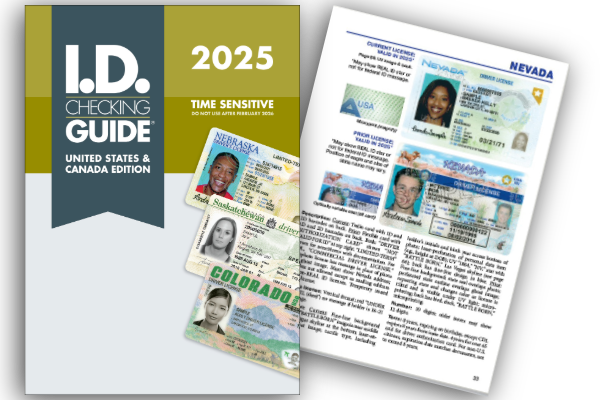
The I.D. Checking Guide (U.S. & Canada) gives workers that reference. It helps confirm whether a driver's license or ID is a valid, government-issued original, not a fake ID. For more than 50 years, this print and digital publication has provided the specifications needed to verify documents accurately and maintain consistency across shifts.
A Standardized Way to Verify IDs
Checking a physical ID takes more than a glance. Verifiers need a consistent process for confirming that each document matches its official specifications. Under pressure, staff may rely on memory instead of a real reference, and that's often where mistakes happen.
The I.D. Checking Guide (U.S. & Canada) closes that gap with full-color images of government-issued documents, alongside numbering structure, validity period, data layout, security features, and other identifying details.
Verifiers use the Guide to check out-of-state and international credentials with the same care they give familiar Ohio licenses. It covers every U.S. state and territory, all Canadian provinces and territories, and federal documents from both countries, supporting id verification across jurisdictions.
Key Details to Check for a Fake Ohio ID
Personnel use the Guide to:
- Confirm the card uses the correct orientation and data layout.
- Check that the expiration date and validity period match the stated policy.
- Verify whether the license is REAL ID-compliant or shows the correct non-REAL ID statement.
- Verify license number structure and formatting.
- Check the positioning and appearance of ghost images.
- Confirm security features such as tactile text, ultraviolet ink images, and microprinting.
- Match the physical description on the document to the presenter's characteristics.
Common Types of Fraudulent Credentials
Fraudulent ID credentials generally fall into two groups: modified genuine cards and fully fabricated imitations. With modified credentials, someone alters a real document, scraping, bleaching, or overwriting details like the date of birth or expiration date to get around state laws.
Fabricated cards, or look-alike forgeries, are built from unauthorized materials to imitate an official layout. These cards often show errors in text sizing, incorrect card flexibility, or poorly reproduced security graphics. A standardized reference makes these flaws easier to catch, whether the card belongs to a college student or an adult presenting a modified license.
Credential Verification and Compliance Across These Sectors
Verifiers across multiple sectors follow standard procedures for consistent, accurate credential checks. A physical reference manual gives staff a consistent basis for evaluating ID credentials, regardless of which sector they work in.
Financial Services
Accepting an unverified credential carries real risk for banking centers, credit unions, and check-cashing operations, since fraudulent documents can open the door to identity theft and account fraud. Employees may need to review expiration dates and identifying numbers as part of routine account and transaction checks.
Law Enforcement
During a traffic stop, field patrol, or active investigation, an officer typically starts with the card itself: orientation, photo match, and expiration, before moving to embedded security features if something looks off. Law enforcement personnel use this kind of layered check to evaluate whether a credential is valid.
Alcohol Sales and Hospitality
The stakes are high for bars, breweries, and retail stores that serve alcohol: selling to a minor in Ohio can mean fines, required alcohol counseling, and a possible license suspension for the business. Venues near colleges and busy nightlife areas may face more pressure to catch a fake id before a sale is made.
Facility Access Control
Picture a guard checking credentials at a data center or utility plant entrance. Each card gets compared against established criteria before access is granted, which helps maintain site security and confirm access authorization for every visitor.
Alcohol Sales & Service Guidelines for Ohio
- Minimum age to consume: 21 with some exceptions - Minimum age to serve: 19 - Minimum age to bartend: 19
A person under 21 may purchase alcoholic beverages as part of a law enforcement action.
Penalties for serving or selling to a minor: In Ohio, selling alcohol to someone under 21 is a first-degree misdemeanor, and the penalties include a fine of up to $1,000 and/or up to six months in jail: A mandatory minimum fine of $500, Court costs, Alcohol counseling, Community service, and Probation.
In addition to these penalties, the Liquor Control Commission (LCC) may suspend or revoke the permit privileges of a permit holder who sells alcohol to an underage person. First-time violators may face a suspension of one to four days, but they may be able to pay a monetary forfeiture instead. The forfeiture is usually around $100–$200 per day of the suspension.
There are some exceptions to the underage prohibitions, including if the person providing the alcohol is the underage person's parent, spouse who is not under 21, or legal guardian, and is present when the underage person consumes the alcohol.


Legal Consequences of Possessing a Fake ID in Ohio
Verifiers aren't the only ones affected by fake ID laws. It helps to understand what someone risks by using one. Ohio law treats possession of a fake ID as a common charge tied to underage drinking enforcement, and the fines for using a fake ID to buy alcohol can come with a criminal record that follows a person well beyond a single night out.
Common charges connected to possessing a fake ID in Ohio can include a first-degree misdemeanor, similar in severity to the charge a business faces for selling to a minor. Depending on the circumstances, a person could face jail and a fine, months in jail in more serious cases, and administrative consequences such as a driver's license suspension. Providing false information to obtain a license or ID card is treated separately under Ohio law and can carry its own charges.
Anyone facing a fake ID charge should understand that these situations vary based on individual circumstances. A criminal defense attorney can explain how state law applies to a specific case, and many offer free consults for an initial review. This guide focuses on helping organizations verify credentials accurately. It isn't a substitute for legal advice.
Ohio Fake ID FAQs
Which physical features should a verifier check first?
Start with card orientation, expiration validity, and physical description. Then move to security features like tactile text or microprinting.
What makes Ohio a target area for look-alike forgeries?
A mix of local, student, and out-of-state traffic through bars and college towns creates fast-paced checkout moments. That pace can make it harder for staff to look closely at every driver's license or ID card, which raises the risk that look-alike forgeries slip through.
How do verifiers handle unexpected updates to driver's license formats?
State authorities update credential layouts and security features from time to time. Verifiers should not assume an unfamiliar card is valid just because it looks new. Checking the document against current information in the reference Guide helps verifiers apply the right ID verification criteria.
Does the Guide cover credentials issued outside of Ohio?
Yes. The publication includes specifications for government-issued ID credentials from every U.S. state and territory, and every Canadian province and territory. It also covers federally issued credentials such as passports, visas, and immigration documents.
What happens if someone is caught possessing a fake ID in Ohio?
Consequences can include a misdemeanor charge, fines, possible jail time, and a mark on a criminal record. Because outcomes depend on the specifics of a case, anyone facing charges should speak with a criminal defense attorney rather than rely on general information.
How does manual verification support business compliance?
A physical reference guide helps employees follow a standardized ID verification process. It also supports the organization's efforts to exercise due diligence in meeting applicable state and federal requirements.
Strengthen Your Organization's ID Verification Process
Accepting an invalid driver's license or fake ID can expose your organization to legal, financial, and regulatory consequences. A standardized, physical review process helps employees spot potentially fraudulent documents and apply consistent verification steps.
Equipping your team with a physical reference reduces guesswork and gives staff a consistent basis for evaluating credentials. The Drivers License Guide has supported ID verification professionals for more than 50 years.
Place your order for the I.D. Checking Guide (U.S. & Canada) today to give your team the certainty required to follow state laws.
How to Spot a Fake Ohio ID
For law enforcement officers, bank tellers, car rental agents, human resources professionals and others who must verify ID in a professional capacity, the recent surge in fake IDs is challenging. The liability and losses that result from accepting a fake ID are large. The I.D. Checking Guide assists in the ID verification process by showing what an actual, valid ID looks like at full-size, and highlights the details of the licenses, making it much easier to spot the fraud. Before approving an expensive car rental, opening a new bank account or hiring a new employee, make sure the driver's license or ID card has the correct numbering, UV, microprint, ghost images, expiration, and other details that counterfeiters often miss.

Markets Served

Financial Services

Alcohol Control

Government

Law Enforcement
What the I.D. Checking Guide Includes:
- A full page or more for each U.S. state and Canadian province, showing driver's licenses and ID cards.
- Security image information for ghost images, laser perforation, microprint, UV and other validation details.
- Explanation of what the proper alphanumeric sequencing of a Ohio ID or Driver's License should be (how many letters, numbers, etc.).
- U.S. Federal documents including immigration, military ID, Visas and passport cards.
- "How to check driver's licenses" techniques for training.