
Everything you Need
To Verify and Control
North Dakota Identity
Documents
Our printed I.D. Checking Guides and online versions are used by
DMVs, government agencies at all levels, and businesses.
Check North Dakota Drivers Licenses & IDs

Addressing Identity Document Fraud Throughout North Dakota
Spotting a fake North Dakota ID quickly is just as important as confirming a valid one.
Read More
North Dakota sees a steady mix of local, out-of-state, and international IDs. This makes accurate driver's license verification an everyday challenge for frontline staff. Detecting fraudulent credentials starts with a reliable way to check what a card should actually look like.
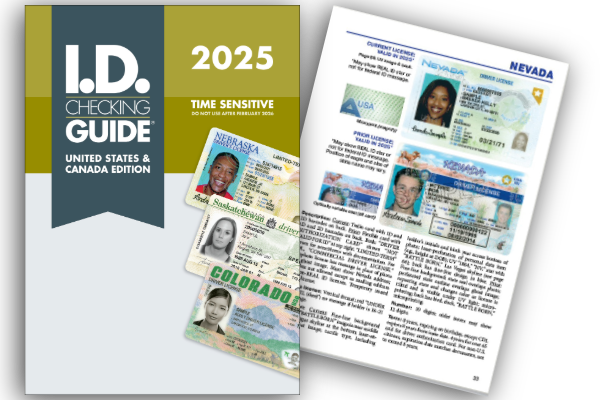
The I.D. Checking Guide (U.S. & Canada) gives workers that reference. It helps confirm whether a driver's license or ID is a valid, government-issued original, not a fake ID. For more than 50 years, this print and digital publication has provided the specifications needed to verify documents accurately. It helps teams stay consistent across shifts.
A Standardized Way to Verify IDs
Checking a physical ID takes more than a glance. Verifiers need a consistent process for confirming that each document matches its official specifications. Under pressure, or during a rush, staff may rely on memory instead of a real reference. That's when mistakes happen.
The I.D. Checking Guide (U.S. & Canada) closes that gap. It shows full-color images of government-issued documents. Each entry includes numbering structure, validity period, data layout, security features, and other identifying details.
Verifiers use the Guide to check out-of-state and international credentials with the same care they give familiar North Dakota licenses. It covers every U.S. state and territory, all Canadian provinces and territories, and federal documents from both countries. That range supports id verification across jurisdictions, not just one state.
Key Details to Check for a Fake North Dakota ID
Personnel use the Guide to:
- Confirm the card uses the correct orientation and data layout.
- Check that the expiration date and validity period match the stated policy.
- Verify whether the license is REAL ID-compliant or shows the correct non-REAL ID statement.
- Verify license number structure and formatting.
- Check the positioning and appearance of ghost images.
- Confirm security features such as tactile text, ultraviolet ink images, and microprinting.
- Match the physical description on the document to the presenter's characteristics.
Common Types of Fraudulent Credentials
Fraudulent ID credentials generally fall into two groups: modified genuine cards and fully fabricated imitations. With modified credentials, someone alters a real document. They scrape, bleach, or overwrite details like the date of birth or expiration date to get around state laws.
Fabricated cards, or look-alike forgeries, are built from unauthorized materials to imitate an official layout. These cards often show errors in text sizing, incorrect card flexibility, or poorly reproduced security graphics. A standardized reference makes these flaws easier to catch.
Credential Verification and Compliance Across These Sectors
Verifiers across multiple sectors follow standard procedures for consistent, accurate credential checks. Quick, unassisted visual inspections under pressure can raise the risk of errors. A physical reference manual gives staff a consistent basis for evaluating ID credentials.
Law Enforcement
Confirming identity during traffic stops, field patrols, or active investigations supports officer safety and protects the public. Law enforcement personnel need to assess a driver's license or ID document quickly to evaluate whether it's valid.
Financial Services
Banking centers, credit unions, and check-cashing operations rely on valid identity credentials for secure customer transactions. Employees may need to review expiration dates and identifying numbers as part of routine account and transaction checks.
Alcohol Sales and Hospitality
Bars, breweries, and retail stores must verify a patron's age before letting them purchase alcohol, in order to comply with state laws. Venues near colleges, event venues, and busy nightlife areas may see more pressure to verify IDs consistently.
Facility Access Control
Corporate security staff rely on photo identification cards to prevent unauthorized access to high-security areas like data centers, power plants, and utility infrastructure. Guards check each credential against established criteria to help maintain site security and confirm access authorization.
Alcohol Sales & Service Guidelines for North Dakota
- Minimum age to consume: 21 - Minimum age to serve: 18 - Minimum age to bartend: 21 - A manager or supervisor must be present when an underage person is serving or dispensing alcoholic beverages.
Alcohol retailers may seize apparently false IDs without fear of prosecution even if the identification is valid.
A person under 21 may not purchase alcoholic beverages as part of a law enforcement action.
Penalties for serving or selling to a minor: In North Dakota, the penalty for selling or serving alcohol to a minor depends on the age of the minor and other factors:
- Under 18
A Class 1 misdemeanor, which can result in up to a year in jail and/or a $2,000 fine
- 18–21
A Class 2 misdemeanor, unless the purchase is made in the presence of a parent, guardian, or spouse who is 21 or older. This violation can result in up to 30 days in jail and/or a $500 fine
- Under 21
A Class A misdemeanor, which can result in up to a year in jail and/or a $3,000 fine
Other factors that can increase the penalty include:
- Providing alcohol to someone who is intoxicated or incompetent
- Committing the offense in the course of a commercial or for-profit activity
License holders may also face administrative fees and license suspension:
- First offense: A $250 administrative fee
- Second offense within 24 months: A $500 administrative fee and a one-day license suspension


North Dakota Fake ID FAQs
Which physical features should a verifier check first?
Start with card orientation, expiration validity, and physical description. Then move to security features like tactile text or microprinting.
What makes North Dakota a target area for look-alike forgeries?
A mix of local, student, and out-of-state traffic through bars and event venues creates fast-paced checkout moments. That pace can make it harder for staff to look closely at every driver's license or ID card, which raises the risk that look-alike forgeries slip through.
How do verifiers handle unexpected updates to driver's license formats?
State authorities update credential layouts and security features from time to time. Verifiers should not assume an unfamiliar card is valid just because it looks new. Checking the document against current information in the reference Guide helps verifiers apply the right id verification criteria.
Does the Guide cover credentials issued outside of North Dakota?
Yes. The publication includes specifications for government-issued ID credentials from every U.S. state and territory, and every Canadian province and territory. It also covers federally issued credentials such as passports, visas, and immigration documents.
How does manual verification support business compliance?
A physical reference guide helps employees follow a standardized id verification process. It also supports the organization's efforts to exercise due diligence in meeting applicable state and federal requirements.
Strengthen Your Organization's ID Verification Process
Accepting an invalid driver's license or fake ID can expose your organization to legal, financial, and regulatory consequences. A standardized, physical review process helps employees spot potentially fraudulent documents and apply consistent verification steps.
Equipping your team with a physical reference reduces guesswork. It gives staff a consistent basis for evaluating credentials. The Drivers License Guide has supported ID verification professionals for more than 50 years.
Order copies of the I.D. Checking Guide (U.S. & Canada) today to give your team the certainty required to follow state laws.
How to Spot a Fake North Dakota ID
For law enforcement officers, bank tellers, car rental agents, human resources professionals and others who must verify ID in a professional capacity, the recent surge in fake IDs is challenging. The liability and losses that result from accepting a fake ID are large. The I.D. Checking Guide assists in the ID verification process by showing what an actual, valid ID looks like at full-size, and highlights the details of the licenses, making it much easier to spot the fraud. Before approving an expensive car rental, opening a new bank account or hiring a new employee, make sure the driver's license or ID card has the correct numbering, UV, microprint, ghost images, expiration, and other details that counterfeiters often miss.

Markets Served

Financial Services

Alcohol Control

Government

Law Enforcement
What the I.D. Checking Guide Includes:
- A full page or more for each U.S. state and Canadian province, showing driver's licenses and ID cards.
- Security image information for ghost images, laser perforation, microprint, UV and other validation details.
- Explanation of what the proper alphanumeric sequencing of a North Dakota ID or Driver's License should be (how many letters, numbers, etc.).
- U.S. Federal documents including immigration, military ID, Visas and passport cards.
- "How to check driver's licenses" techniques for training.