
Everything you Need
To Verify and Control
New Mexico Identity
Documents
Our printed I.D. Checking Guides and online versions are used by
DMVs, government agencies at all levels, and businesses.
Check New Mexico Drivers Licenses & IDs

ID Verification Challenges
Spotting a fake New Mexico ID quickly is just as important as confirming a valid one.
Read More
New Mexico's position at the crossroads of the Southwest presents significant identity verification demands. Establishments routinely handle credentials issued by many states and countries, making careful evaluation essential for detecting fraudulent credentials.
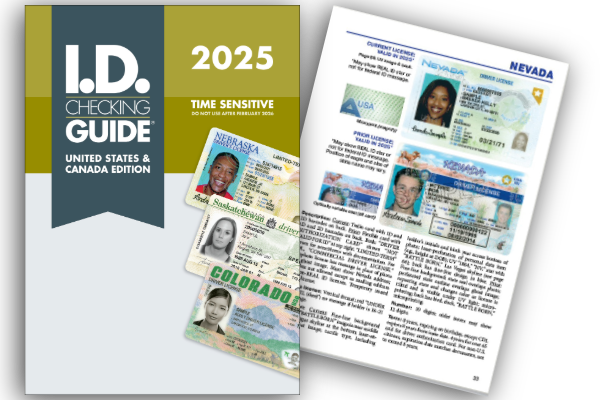
The I.D. Checking Guide (U.S. & Canada) provides organizations with a standardized reference for accurate document verification. For more than 50 years, this print and digital publication has served as a trusted reference for the formatting details needed to confirm that an ID corresponds to the person presenting it.
A Standardized Way to Verify IDs
Physical card review requires a systematic process to compare document features against known standards and to identify inconsistencies. Frontline workers often depend on guesswork or memory when processing unfamiliar licenses under strict time constraints. The I.D. Checking Guide (U.S. & Canada) addresses this compliance risk by delivering full-color, highly detailed representations of valid government-issued credentials.
The publication covers government-issued identity documents for every U.S. state, U.S. territory, and all Canadian provinces and territories. Images and accompanying text provide the information needed to authenticate a document, such as card orientation, numbering system, term, and security features. Teams compare the document in question against the details shown in the Guide to authenticate out-of-state cards with a consistent, reliable process to defend businesses against sophisticated fraud.
Key Details to Check for a Fake New Mexico ID
Operators must recognize the specific features of a New Mexico license to verify that it matches established document standards. Users should compare the presented card against the security features detailed in the reference manual.
Your team must follow a strict process to:
- Verify using card orientation, number format, expiration, and physical match.
- Inspect the explicit design configurations mandated for REAL ID credentials.
- Confirm alphanumeric character counts within the primary license field.
- Examine the placement of secondary ghost images and layered background graphics.
- Match the physical description of the document to the presenter's characteristics.
- Analyze document security features, including tactile text, ultraviolet ink images, and microprinting.
Types of Fake IDs to Watch For
Fraudulent credentials typically circulate as either modified genuine cards or completely fabricated imitations. For modified genuine cards, individuals acquire a legally issued document and actively scrape, bleach, or overwrite details like the date of birth or expiration stamp to circumvent state laws.
Fabricated cards are manufactured entirely from unapproved materials to simulate an official state layout. These look-alike forgeries regularly fail inspection due to incorrect card flexibility, erroneous or misplaced text, or poorly executed security features. Reviewing a questionable license directly against a standardized reference manual exposes these physical discrepancies immediately.
Compliance Enforcement Across These Sectors
Verifiers across multiple commercial and regulatory sectors must execute standardized checking procedures to maintain strict compliance. Relying on unassisted visual inspections introduces severe liability risks for an organization. Deploying an objective document manual empowers personnel to conduct accurate, legally sound security checks across all departments.
Law Enforcement
Confirming identity during roadside stops, active investigations, and field patrols is essential to ensure officer safety and protect the public. Law enforcement must quickly assess document structure to authenticate driver data and strictly enforce state traffic laws.
Financial Services
Banks, credit unions, and dedicated check-cashing locations require verified credentials to secure customer transactions and defend teller operations from financial fraud. Professionals must scrutinize expiration stamps and number sequences, while also confirming work authorization through official document markings during onboarding procedures.
Alcohol Sales and Hospitality
Bars, restaurants, and retail package stores must authenticate a patron's age prior to a transaction to demonstrate compliance with state laws and avoid liquor license suspension. Operations located near major universities or high-traffic tourist zones depend on physical references to prevent underage alcohol service.
Facility Access Control
Private security personnel utilize photo identification to restrict unapproved entry into secure sites, including corporate data centers, utility grids, and government facilities. Guards must rigorously check every credential against an official standard to maintain facility integrity and confirm proper access authorization.
Alcohol Sales & Service Guidelines for New Mexico
- Minimum age to consume: 21 - Minimum age to serve: 18 - Minimum age to bartend: 21 - Server/seller alcohol training required.
A person under 21 may not purchase alcoholic beverages as part of a law enforcement action.
Penalties for serving or selling to a minor: New Mexico has several penalties for selling or serving alcohol to minors, including fines, license suspension, and jail time:
- First offense
A fine of $1,000–$2,000 and a minimum one-day suspension of alcohol sales
- Second offense
A fine of $2,000–$3,000 and a minimum seven-day suspension of alcohol sales
- Subsequent offenses
A fine of up to $1,000 and possible community service
- License suspension or revocation
The director may suspend or revoke a license or permit, or both, and impose a fine of up to $10,000
- Felony
A second offense is a fourth-degree felony that can result in up to 18 months in jail and a $5,000 fine
In addition, adults who provide alcohol to minors who are not their own children can be charged with a felony. Minors aged 18–21 can also be charged with misdemeanor possession of alcohol. Adults 18 and older can also be sued civilly for damages caused by giving alcohol to minors.


New Mexico Fake ID FAQs
Which physical features should a verifier check first?
Personnel should evaluate the card orientation, expiration validity, and physical description before authenticating security features like microprinting.
What makes New Mexico a target area for look-alike forgeries?
Extensive interstate highway traffic, major universities, and international border proximity generate environments with rapid transaction volumes. This exposure encourages individuals to attempt fraud using look-alike forgeries.
How do verifiers handle unexpected updates to driver's license formats?
State agencies routinely update credential designs by altering layouts, character positioning, and security features. Verifiers must not assume a document is valid just because its design appears new. Checking the unfamiliar format against verified updates in the reference manual ensures adherence to current laws.
Does the manual outline credentials issued outside of New Mexico?
Yes. The publication includes exact specifications for every U.S. state, U.S. territory, and all Canadian provinces and territories.
How does manual verification support business compliance?
Utilizing a physical reference guide ensures employees follow a standardized process, proving the organization exercises due diligence to follow state laws.
Help Your Team Verify IDs Accurately
Accepting invalid identification can expose your business to legal penalties, financial losses, and regulatory consequences. Establishing a standardized physical review process helps staff identify potentially fraudulent documents and apply consistent verification practices.
Equipping your operation with a physical reference system removes guesswork and establishes operational control. Drivers License Guide has defined the industry standard for fraud prevention and document compliance for over 50 years.
Order the I.D. Checking Guide (U.S. & Canada) today to give your team the trusted reference needed to verify IDs accurately.
How to Spot a Fake New Mexico ID
For law enforcement officers, bank tellers, car rental agents, human resources professionals and others who must verify ID in a professional capacity, the recent surge in fake IDs is challenging. The liability and losses that result from accepting a fake ID are large. The I.D. Checking Guide assists in the ID verification process by showing what an actual, valid ID looks like at full-size, and highlights the details of the licenses, making it much easier to spot the fraud. Before approving an expensive car rental, opening a new bank account or hiring a new employee, make sure the driver's license or ID card has the correct numbering, UV, microprint, ghost images, expiration, and other details that counterfeiters often miss.

Markets Served

Financial Services

Alcohol Control

Government

Law Enforcement
What the I.D. Checking Guide Includes:
- A full page or more for each U.S. state and Canadian province, showing driver's licenses and ID cards.
- Security image information for ghost images, laser perforation, microprint, UV and other validation details.
- Explanation of what the proper alphanumeric sequencing of a New Mexico ID or Driver's License should be (how many letters, numbers, etc.).
- U.S. Federal documents including immigration, military ID, Visas and passport cards.
- "How to check driver's licenses" techniques for training.