Everything you Need
To Verify and Control
Montana Identity
Documents
Our printed I.D. Checking Guides and online versions are used by
DMVs, government agencies at all levels, and businesses.
Check Montana Drivers Licenses & IDs

Identity Verification Requires a Careful, Consistent Approach
Spotting a fake Montana ID quickly is just as important as confirming a valid one. Confirming identity in Montana is an important part of daily operations across many industries. Whether it is a roadside interaction, a financial transaction, or a point of sale, the ability to verify identification helps reduce risk and maintain compliance with laws.
Read More
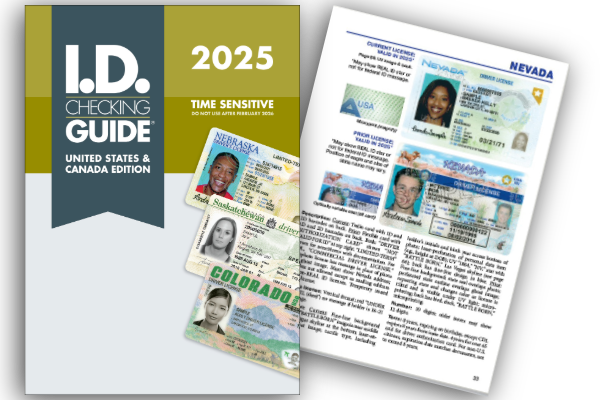
The I.D. Checking Guide (U.S. & Canada) supports this process by providing a clear reference for every U.S. state, U.S. territory, and all Canadian provinces and territories. For Montana, this means having access to accurate details about how official identification is structured and what features to expect.
Mistakes in identification can lead to serious consequences. These may include financial loss, legal exposure, or safety concerns. That is why professionals need a reliable way to confirm that an ID corresponds to the person presenting it.
What the I.D. Checking Guide Helps You Verify in Montana
Montana driver's licenses and identification cards include specific design elements and security features that help confirm authenticity. Understanding these elements allows professionals to move beyond guesswork and verify identification with more confidence.
The guide helps users evaluate how the card is structured, including its orientation and layout. It also shows how the identification number and expiration date should appear, as assigned by the issuing agency. ID numbers must follow a specific format, and expiration dates must reflect the correct validity period. Checking these details is an important part of verification.
Beyond layout, the guide also supports confirming that the physical characteristics on the ID match the individual presenting it. This step is often overlooked but plays a key role in ensuring that the identification truly belongs to the person using it.
Security features such as microprinting and layered design elements also play an important role. These features are designed to be consistent and recognizable, which makes them useful points of comparison during the verification process.
Types of Fake ID to Watch For in Montana
Not all identification issues are obvious at first glance. In many cases, the document itself may appear valid, but the way it is being used raises concerns.
One common situation involves a person presenting a valid ID that belongs to someone else. In these cases, the focus shifts to comparing physical characteristics and confirming that the ID corresponds to the individual. Even small differences can be meaningful.
Another situation involves identification that has been altered. Changes to details such as dates or numbers may not always stand out immediately, which is why familiarity with expected formats is important.
There are also cases where identification is shared between individuals. This can happen in environments where age or access restrictions are enforced. Careful review of both the document and the person presenting it helps reduce the likelihood of error.
Each of these situations reinforces the importance of having a consistent process for verification.
Why ID Verification Matters Across These Industries
Across Montana, identity verification plays a critical role in supporting safe and lawful operations across industries.
In law enforcement settings, confirming identity during roadside stops or investigations helps officers make informed decisions. Accurate identification supports both public safety and officer safety by reducing uncertainty in the moment.
In financial environments, verifying identity is essential for completing transactions and protecting accounts. Banks, credit unions, and other service providers rely on accurate identification to ensure that access is granted only to authorized individuals.
In alcohol sales and hospitality settings, confirming age is a legal requirement. Businesses must demonstrate that they are making a reasonable effort to verify identification before completing a sale. Failure to do so can result in fines or license consequences.
In controlled access environments, security teams depend on identification to restrict entry to authorized individuals. This is especially important in locations where sensitive information or infrastructure must be protected.
In each of these situations, the goal is the same. Confirm that the identification is valid and that it corresponds to the person presenting it.
Alcohol Sales & Service Guidelines for Montana
- Minimum age to consume: 21
- Minimum age to serve: 18
- Minimum age to bartend: 18
- Server/seller alcohol training required.
A person under 21 may not purchase alcoholic beverages as part of a law enforcement action.
Penalties for serving or selling to a minor: In Montana, the penalty for selling alcohol to someone under 21 can vary depending on the offense:
- First offense: $500 fine and up to six months in jail
- Second offense: $1,000 fine and up to six months in jail
- Third offense: $1,500 fine or 20-day suspension
In addition to fines and jail time, individuals convicted of supplying alcohol to minors may also face probation, community service, and other services. Businesses with liquor licenses may also face administrative actions, such as license suspension or revocation


How to Spot a Fake Montana ID Step by Step
A consistent approach to ID verification helps reduce errors and improve confidence.
Professionals should begin by reviewing the overall layout of the Montana ID and comparing it to known formats. This includes checking how information is organized and ensuring that the card follows expected design patterns.
From there, attention should be given to expiration dates and identification numbers. These elements should align with standard formats and appear consistent with official issuance practices.
Next, the physical characteristics listed on the ID should be compared carefully to the individual presenting it. This step helps confirm that the identification corresponds to the person.
Security features such as microprinting should also be examined. These features are designed to be consistent across official IDs and provide another layer of verification.
Taking a structured approach allows professionals to move through each step with clarity and avoid relying on assumptions.
Common Challenges When Verifying IDs
Even experienced professionals can encounter challenges when verifying identification.
In some cases, staff may not feel confident in what they are looking for. Without a clear reference, it can be difficult to determine whether something is consistent or out of place.
Time pressure can also be a factor. In busy environments, there may be a tendency to move quickly through the process, which increases the risk of missing important details.
Another challenge is keeping up with changes in identification design. As states update their IDs, it becomes more difficult to rely on memory alone.
These challenges highlight the importance of having reliable reference material that can be used in real time.
Montana Fake ID FAQs
What should I focus on when reviewing a Montana driver's license
Start with the overall layout and ensure it matches known Montana formats. Then review expiration dates and compare physical characteristics to confirm the ID corresponds to the person.
How can I improve accuracy when verifying ID
Using a consistent process and referencing known identification formats helps reduce uncertainty and improve accuracy.
Are Montana IDs updated over time
Yes. Identification designs can change, which is why having access to current reference material is important.
Why is comparing physical characteristics important
This step helps confirm that the ID belongs to the individual presenting it, which is essential for accurate verification.
What is the biggest risk when checking ID quickly
Rushing can lead to missed details. Taking a moment to review the ID carefully helps prevent errors.
Verify IDs With Confidence
Accurate identification is essential for maintaining safety, compliance, and trust. Without a clear reference, it can be difficult to confirm whether an ID meets expected standards.
The I.D. Checking Guide (U.S. & Canada) provides detailed information covering every U.S. state, U.S. territory, and all Canadian provinces and territories. It helps professionals compare identification against known security features so they can verify identity with confidence in real-world situations.
Give your team the tools they need to confirm identification accurately and support compliance across Montana every day.
How to Spot a Fake Montana ID
For law enforcement officers, bank tellers, car rental agents, human resources professionals and others who must verify ID in a professional capacity, the recent surge in fake IDs is challenging. The liability and losses that result from accepting a fake ID are large. The I.D. Checking Guide assists in the ID verification process by showing what an actual, valid ID looks like at full-size, and highlights the details of the licenses, making it much easier to spot the fraud. Before approving an expensive car rental, opening a new bank account or hiring a new employee, make sure the driver's license or ID card has the correct numbering, UV, microprint, ghost images, expiration, and other details that counterfeiters often miss.

Markets Served

Financial Services

Alcohol Control

Government

Law Enforcement
What the I.D. Checking Guide Includes:
- A full page or more for each U.S. state and Canadian province, showing driver's licenses and ID cards.
- Security image information for ghost images, laser perforation, microprint, UV and other validation details.
- Explanation of what the proper alphanumeric sequencing of a Montana ID or Driver's License should be (how many letters, numbers, etc.).
- U.S. Federal documents including immigration, military ID, Visas and passport cards.
- "How to check driver's licenses" techniques for training.