
Everything you Need
To Verify and Control
Mississippi Identity
Documents
Our printed I.D. Checking Guides and online versions are used by
DMVs, government agencies at all levels, and businesses.
Check Mississippi Drivers Licenses & IDs

Why Proper ID Verification Matters in Mississippi
From the gaming floors along the Gulf Coast to college towns like Oxford and Starkville, knowing how to spot a fake Mississippi ID carries real responsibility. Businesses across the state depend on accurate ID review to protect their licenses, maintain compliance, and reduce fraud exposure.
Read More
Fake and altered Mississippi driver's licenses are often used to purchase alcohol, cash checks, open accounts, or gain entry to restricted locations. When identification is not reviewed carefully, the consequences can include fines, license suspension, criminal penalties, and reputational harm.
A trusted visual reference such as the I.D. Checking Guide (U.S. & Canada) helps teams verify credentials correctly. Whether reviewing an ID at a Jackson financial institution, a Biloxi casino entrance, or during a traffic stop in Hattiesburg, the ability to confirm authenticity supports both public safety and lawful operations.
How the I.D. Checking Guide Supports Mississippi Professionals
Counterfeit credentials are designed to resemble legitimate identification. However, authentic Mississippi licenses contain distinct security elements and layout standards that must match official specifications.
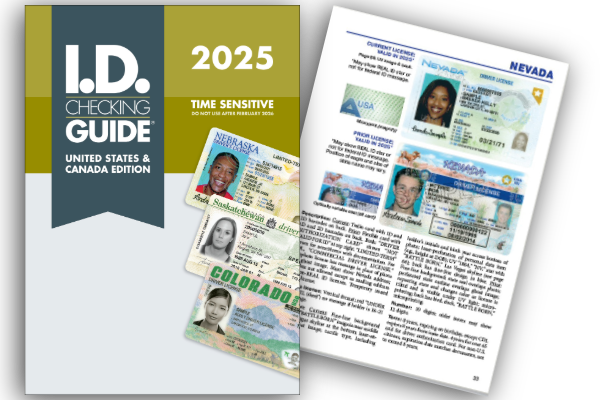
The I.D. Checking Guide (U.S. & Canada) allows users to compare a presented card against verified examples that illustrate each authorized design element in full color and life size. With the Guide, your staff can:
- Examine accurate reproductions of current Mississippi driver's licenses and identification cards
- Review built-in protections such as holographic overlays, ultraviolet elements, ghost images, and precise microprinting
- Confirm card orientation, data placement, and numbering sequences established by the Mississippi Department of Public Safety
Side-by-side comparison provides immediate clarity, allowing staff to make informed decisions without hesitation while following Mississippi laws.
What the Guide Helps You Verify
The I.D. Checking Guide includes detailed reference material for every U.S. state, U.S. territory, and all Canadian provinces and territories. When reviewing a Mississippi credential, professionals can verify:
- Under-21 license orientation: Vertical formats that clearly distinguish minors from those 21 and older
- Card variations: Differences between standard licenses, REAL ID-compliant cards, and commercial driver credentials
- Embedded protections: Holograms, ultraviolet printing, ghost portraits, and laser-engraved microprinting
- Number format: Mississippi-specific license numbering structure and spacing
- Expiration cycle: Standard renewal timelines that help confirm validity
- Interstate comparisons: Cross-references to other jurisdictions for individuals presenting out-of-state identification
These elements allow professionals to recognize inconsistencies before accepting a credential as valid.
Common Fake ID Types Encountered in Mississippi
Fraudulent identification in Mississippi generally falls into two categories:
- Altered authentic IDs – Legitimate cards that have been modified, often to change the date of birth or personal information
- Counterfeit duplicates – Replicated cards that copy the appearance of Mississippi credentials but fail to reproduce secure features accurately
By reviewing the structural layout, microprinting, and security elements described in the Guide, staff can detect irregularities that may not be obvious at first glance.
Industries in Mississippi That Rely on Accurate ID Verification
Fake IDs present challenges across multiple industries, increasing the potential for fraud, compliance violations, and legal liabilities. Knowing how to verify identification documents properly is essential for preventing unauthorized transactions.
Government and Facility Access
Public agencies and security personnel verify identification before granting access to restricted facilities or issuing credentials. Accurate comparison against known design standards reduces risk.
Human Resources and Hiring
Employers throughout Mississippi confirm identity during onboarding to document lawful employment eligibility and maintain compliance with federal and state laws.
Hospitality, Gaming, and Alcohol Sales
Casinos, bars, restaurants, and retailers across Mississippi must confirm legal age before completing alcohol sales. Proper ID review demonstrates training efforts and reduces exposure to penalties or license suspension.
Financial Services
Banks, credit unions, and lending offices depend on authentic identification before opening accounts or processing transactions. Careful verification helps prevent identity fraud and money laundering activities.
Law Enforcement
During traffic stops, patrol duties, or investigations, officers must confirm that the ID corresponds to the person presenting it. Immediate access to verified card examples supports officer safety and accurate recordkeeping.
Alcohol Sales & Service Guidelines for Mississippi
Minimum age to consume: 21
Minimum age to serve: 18
Minimum age to bartend: 21
A person under 21 may not purchase alcoholic beverages as part of a law enforcement action.


Penalties for serving or selling to a minor: In Mississippi, selling alcohol to a minor is a misdemeanor that can result in a fine of up to $1,000 for the first offense. The business or person who sells to the minor may also face other consequences, such as:
- License suspension: The business's liquor license may be suspended for up to three weeks for a third offense within a year, or revoked for a fourth or subsequent offense
- Probation: The business or person may be placed on probation for one year
- Community service: The business or person may be required to perform community service
The minor who buys the alcohol can also face charges, including:
- A fine of up to $500
- Up to 90 days suspension of their driver's license
- 30 days community service
- The violation remaining on their record
FAQs About Spotting Fake Mississippi IDs
Why is verifying identification especially important in Mississippi?
Mississippi has active college communities, tourism along the Gulf Coast, and regulated gaming environments. These factors increase attempts to use fraudulent identification. Careful verification protects businesses and the public.
How does the I.D. Checking Guide help Mississippi users?
The Guide provides life-size images, layout specifications, and descriptions of every security feature for Mississippi credentials and those issued in every U.S. state, U.S. territory, and all Canadian provinces and territories.
Who benefits most from using the Guide in Mississippi?
Law enforcement officers, hospitality staff, financial institutions, human resources departments, and security professionals all rely on dependable ID references during routine checks.
What risks do Mississippi businesses face if they accept a fake ID?
Consequences can include fines, criminal charges, permit suspension, and civil liability. Consistent, lawful ID verification reduces those risks.
Can the Guide assist in recognizing look-alike IDs?
Yes. By comparing physical characteristics, layout standards, orientation, and embedded protections, professionals can determine whether the person matches the credential presented.
Strengthen ID Verification Across Mississippi
Fraudulent identification threatens businesses and agencies statewide. With a trusted reference tool, your team can verify credentials confidently and consistently. For more than 50 years, Drivers License Guide has supplied the industry-standard resources professionals rely on to authenticate identification accurately. Order the I.D. Checking Guide (U.S. & Canada), the I.D. Checking Guide (International), or the U.S. Identification Manual today to equip your team with authoritative ID verification tools and reinforce your commitment to lawful, responsible operations.
How to Spot a Fake Mississippi ID
For law enforcement officers, bank tellers, car rental agents, human resources professionals and others who must verify ID in a professional capacity, the recent surge in fake IDs is challenging. The liability and losses that result from accepting a fake ID are large. The I.D. Checking Guide assists in the ID verification process by showing what an actual, valid ID looks like at full-size, and highlights the details of the licenses, making it much easier to spot the fraud. Before approving an expensive car rental, opening a new bank account or hiring a new employee, make sure the driver's license or ID card has the correct numbering, UV, microprint, ghost images, expiration, and other details that counterfeiters often miss.

Markets Served

Financial Services

Alcohol Control

Government

Law Enforcement
What the I.D. Checking Guide Includes:
- A full page or more for each U.S. state and Canadian province, showing driver's licenses and ID cards.
- Security image information for ghost images, laser perforation, microprint, UV and other validation details.
- Explanation of what the proper alphanumeric sequencing of a Mississippi ID or Driver's License should be (how many letters, numbers, etc.).
- U.S. Federal documents including immigration, military ID, Visas and passport cards.
- "How to check driver's licenses" techniques for training.