Everything you Need
To Verify and Control
Minnesota Identity
Documents
Our printed I.D. Checking Guides and online versions are used by
DMVs, government agencies at all levels, and businesses.
Check Minnesota Drivers Licenses & IDs

Identity Verification Requires Accuracy and Confidence
Spotting a fake Minnesota ID quickly is just as important as confirming a valid one. In Minnesota, confirming identification is a daily responsibility that spans everything from Twin Cities nightlife to Main Street businesses. From routine traffic stops to financial transactions and alcohol sales, professionals must ensure that an ID corresponds to the person presenting it.
Read More
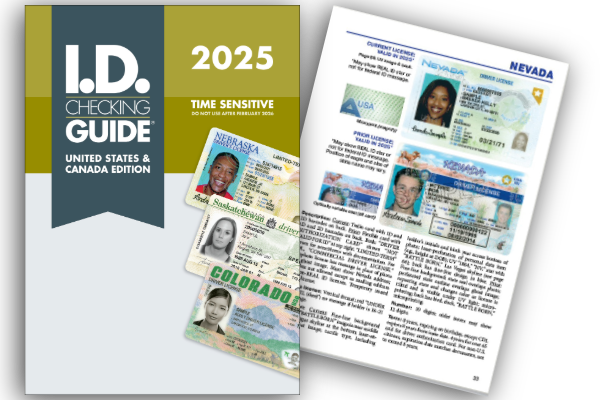
The I.D. Checking Guide (U.S. & Canada) simplifies this process by providing a clear, organized reference for every U.S. state, U.S. territory, and all Canadian provinces and territories. For Minnesota, this means having access to the specific layout, format, and security features used on official identification.
ID verification errors can lead to serious consequences, including financial loss, legal exposure, and safety risks. That is why having a reliable reference for identity verification is so important.
What the I.D. Checking Guide Helps You Verify in Minnesota
Minnesota driver's licenses and identification cards include distinct design elements and security features. Being able to recognize and compare these details is essential when confirming identity. The guide supports verification by helping you:
- Compare the overall card orientation and layout
- Review the format and placement of the identification number
- Confirm expiration dates and issuance patterns
- Examine physical characteristics and ensure they match the individual
- Identify security features such as microprinting and layered design elements
Rather than relying on guesswork, professionals can use the guide to compare identification against known, documented standards.
This approach helps ensure that the identification presented aligns with what is expected from the issuing authority.
Types of Misrepresented Identification to Watch For
Not all identification issues are obvious. Some forms of misrepresentation are subtle and require close attention to detail. In Minnesota, professionals may encounter:
- Look-alike identification — A person presents a valid ID that belongs to someone else with similar physical characteristics. Careful comparison is needed to confirm the ID corresponds to the person.
- Altered identification — Information on the card has been changed, such as the expiration date or date of birth. These changes may be difficult to detect without a reference.
- Borrowed identification — A legitimate card is shared between individuals. This is common in age-restricted environments and requires careful review of physical characteristics.
Recognizing these situations depends on familiarity with how authentic identification credentials should appear and function.
ID Verification Matters Across These Industries
Different industries across Minnesota rely on accurate identification checks to operate safely and within the law.
Law Enforcement and Public Safety
Officers conducting roadside stops or responding to incidents must quickly confirm identity. Accurate identification supports informed decisions and helps maintain safety for both officers and the public.
Financial Institutions and Transaction Services
Banks, credit unions, and check-cashing businesses depend on valid identification to complete transactions. Verifying identity helps prevent fraud and ensures that accounts are accessed only by authorized individuals.
Alcohol Sales and Hospitality
Minnesota businesses that sell alcohol must confirm age before completing a sale. Failing to do so can lead to penalties, fines, or loss of a license. Consistent ID verification helps demonstrate due diligence.
Facility Access and Security
Restricted facilities, including utilities and data-sensitive locations, require strict access control. Security personnel rely on identification to confirm that only authorized individuals are allowed entry.
In each of these settings, the ability to verify identification accurately is essential.
Minnesota Alcohol Sales and Service Laws
Minnesota enforces strict laws regarding alcohol sales and service. Businesses are responsible for confirming that customers meet legal age requirements before completing a sale. Key considerations include:
- Selling alcohol to underage individuals can result in fines and license consequences
- Staff must make a reasonable effort to verify age using valid identification
- Failure to follow laws may lead to increased scrutiny or enforcement actions
Consistent ID verification practices help businesses demonstrate compliance with Minnesota laws and reduce the risk of violations.
How to Spot a Fake Minnesota ID Step by Step
A consistent process improves both accuracy and confidence. When reviewing identification, professionals should:
- Compare the card layout to known Minnesota formats
- Review expiration dates and ensure they are valid
- Examine physical characteristics and confirm they match the individual
- Look closely at security features such as microprinting
- Ensure the identification number follows expected patterns
Using a structured approach reduces uncertainty and helps teams perform checks more efficiently.
Common Challenges When Verifying IDs
Even experienced professionals can face challenges when verifying identification. Some common issues include:
- Inconsistent training across staff
- Uncertainty about what to look for on different IDs
- Time pressure during busy transactions
- Difficulty identifying subtle inconsistencies
These challenges highlight the need for clear, accessible reference tools that can be used in real time.
Alcohol Sales & Service Guidelines for Minnesota
- Minimum age to consume: 21 - Minimum age to serve: 18 - Minimum age to bartend: 18 - A manager or supervisor must be present when an underage person is serving or dispensing alcoholic beverages.
Alcohol retailers may seize apparently false IDs without fear of prosecution even if the identification is valid.
A person under 21 may not purchase alcoholic beverages as part of a law enforcement action.
Penalties for serving or selling to a minor: In Minnesota, selling or giving alcohol to a minor is a gross misdemeanor offense that can result in a fine of up to $3,000 and up to one year in jail. However, it's uncommon for the maximum punishment to be served. A first offense may not result in jail time, but it can result in a criminal record, which can cause problems in the future, especially if the offender works with children. The offender may also face jail time if the minor commits a crime or causes a car accident while intoxicated.
In addition to criminal penalties, adults who provide alcohol to minors may also face civil liability for injuries, property damage, or death. This liability is not covered by most insurance, and both adults and parents may face significant increases in their insurance rates.
Minnesota law also prohibits selling, giving, or furnishing tobacco, tobacco-related devices, or electronic delivery devices to a person under 21. The first violation is a petty misdemeanor, but subsequent violations within five years are misdemeanors.


Minnesota Fake ID FAQs
What should I check first on a Minnesota driver's license
Start with the overall layout and expiration date. Then compare physical characteristics and review security features to confirm consistency.
How can I confirm the ID corresponds to the person
Carefully compare the photo and physical characteristics to the individual presenting the ID. Look for alignment in facial structure and overall appearance.
Are Minnesota IDs consistent in design
Minnesota IDs follow standard formats, but designs may change over time. A reference guide helps ensure you are comparing against the correct version.
What is the most common mistake when checking ID
Rushing the process. Taking a few extra seconds to review details can help prevent errors.
Why is it important to use a reference guide
A guide provides verified examples of identification, helping you compare documents against known standards rather than relying on memory alone.
Verify IDs With Confidence
Accurate identification is essential for safety, compliance, and everyday operations. Without a clear reference, it can be difficult to confirm whether an ID meets expected standards.
The I.D. Checking Guide (U.S. & Canada) gives professionals a reliable way to verify identification across every U.S. state, U.S. territory, and all Canadian provinces and territories. With detailed descriptions and organized information, your team can confidently compare identification and confirm it corresponds to the person presenting it.
Equip your staff with the tools they need to perform accurate ID checks and support compliance in Minnesota every day.
How to Spot a Fake Minnesota ID
For law enforcement officers, bank tellers, car rental agents, human resources professionals and others who must verify ID in a professional capacity, the recent surge in fake IDs is challenging. The liability and losses that result from accepting a fake ID are large. The I.D. Checking Guide assists in the ID verification process by showing what an actual, valid ID looks like at full-size, and highlights the details of the licenses, making it much easier to spot the fraud. Before approving an expensive car rental, opening a new bank account or hiring a new employee, make sure the driver's license or ID card has the correct numbering, UV, microprint, ghost images, expiration, and other details that counterfeiters often miss.

Markets Served

Financial Services

Alcohol Control

Government

Law Enforcement
What the I.D. Checking Guide Includes:
- A full page or more for each U.S. state and Canadian province, showing driver's licenses and ID cards.
- Security image information for ghost images, laser perforation, microprint, UV and other validation details.
- Explanation of what the proper alphanumeric sequencing of a Minnesota ID or Driver's License should be (how many letters, numbers, etc.).
- U.S. Federal documents including immigration, military ID, Visas and passport cards.
- "How to check driver's licenses" techniques for training.