
Everything you Need
To Verify and Control
Kentucky Identity
Documents
Our printed I.D. Checking Guides and online versions are used by
DMVs, government agencies at all levels, and businesses.
Check Kentucky Drivers Licenses & IDs
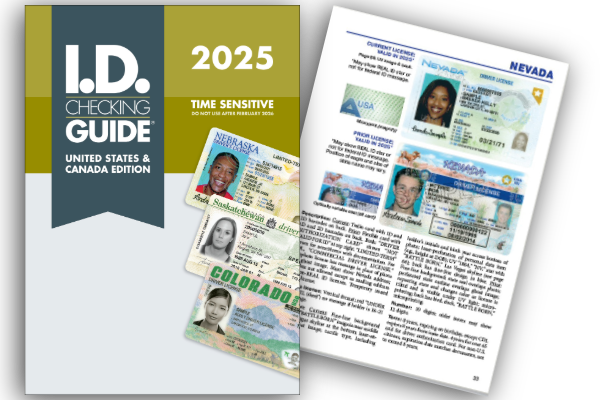

The Need for Accurate ID Verification in Kentucky
From Louisville's entertainment districts to Lexington's college campuses and Bowling Green's growing commercial corridors, Kentucky professionals encounter ID checks every day. Whether it's verifying age for alcohol service, confirming identity during a financial transaction, or conducting a roadside stop, the ability to authenticate a driver's license accurately plays a critical role in safety and compliance.
Read More
Fraudulent identification is commonly used to bypass Kentucky laws related to alcohol sales, misrepresent identity for financial gain, or gain access to restricted facilities. These risks place real responsibility on the individuals and organizations tasked with checking IDs. That's where the I.D. Checking Guide U.S. & Canada Edition becomes essential. For more than 50 years, it has helped professionals across Kentucky verify identification with confidence by providing reliable, side-by-side reference information.
Whether you're serving patrons in downtown Louisville, onboarding employees in Frankfort, or reviewing identification during patrols in rural counties, confirming that an ID corresponds to the person presenting it is not optional, it's required under Kentucky laws and professional standards.
How the I.D. Checking Guide Supports Kentucky Professionals
Many fake IDs are designed to look convincing at a quick glance. Without a trusted reference, it can be difficult to tell whether a card matches Kentucky's official formats or simply imitates them. The I.D. Checking Guide removes that uncertainty by showing what legitimate Kentucky driver's licenses should look like, both current and prior designs.
Using the Guide allows professionals to compare card layout, orientation, and visual design against verified references. It also helps confirm whether numbering formats, expiration placement, and state-specific design elements align with those issued by the Kentucky Transportation Cabinet. This level of detail is critical when making decisions that carry legal and financial consequences.
In addition to Kentucky-specific information, the Guide includes reference images for all 50 U.S. states and the 10 Canadian provinces and territories. This ensures that out-of-state IDs can be evaluated with the same level of confidence as local credentials.
What the Guide Helps You Verify
When checking a Kentucky driver's license, the Guide supports verification beyond surface-level details. It helps confirm that the physical card matches official state designs and that required security features are present in their proper locations.
Kentucky licenses include multiple safeguards, such as holographic elements, microprinting, ghost images, and tactile features intended to help trained professionals distinguish authentic IDs from look-alike forgeries. The Guide also outlines correct number structure and formatting, which is often overlooked but frequently inconsistent on counterfeit cards.
By comparing the ID in hand to verified reference material, professionals can evaluate the license as a whole, rather than relying on a single detail or assumption.
Understanding the Types of Fake IDs in Use
In Kentucky, fake IDs generally fall into a few recognizable categories. Altered or borrowed IDs are common, especially in underage drinking scenarios, where a legitimate card is modified or used by someone other than the rightful holder. These cases often rely on visual similarity rather than authenticity.
Look-alike forgeries are another frequent issue. These cards are designed to resemble Kentucky licenses closely but typically lack accurate security features, proper microprinting, or correct number formatting. Without a reference guide, these inconsistencies are easy to miss.
Out-of-state counterfeits also appear in Kentucky, particularly in college towns and border regions. These IDs attempt to exploit unfamiliarity with other states' designs, making comprehensive reference coverage especially valuable.
Industries in Kentucky That Rely on the I.D. Checking Guide
Retail and Hospitality
Bars, restaurants, distilleries, and liquor retailers across Kentucky depend on accurate ID verification to comply with state alcohol laws. Reliable checks help demonstrate training efforts and protect businesses from fines or license suspension.
Government and Public Agencies
State and local agencies use ID verification when issuing permits, confirming eligibility for services, and managing access to public facilities. Consistency and accuracy are essential in these settings.
Human Resources and Employment
Employers use valid photo identification to confirm identity and work authorization during hiring. Matching the ID to the individual helps reduce the risk of misrepresentation.
Law Enforcement
From traffic stops to investigative work, officers throughout Kentucky rely on accurate identification to ensure officer safety and support lawful enforcement actions.
Financial Institutions
Banks, credit unions, and lenders require dependable ID verification to protect accounts, prevent fraud, and comply with internal policies and laws.
Alcohol Sales & Service Guidelines for Kentucky
Minimum age to consume: 21
Minimum age to serve: 18
Minimum age to bartend: 20
A manager or supervisor must be present when an underage person is serving or dispensing alcoholic beverages.
A person under 21 may not purchase alcoholic beverages as part of a law enforcement action.


Penalties for serving or selling to a minor: In Kentucky, the penalty for selling or serving alcohol to a minor depends on the circumstances and can include fines, jail time, and probation:
- Unlawful transaction with a minor in the third degree: This is a class A misdemeanor that can result in a fine of up to $500 and/or up to one year in prison. This applies to adults who give alcohol to minors, even if they don't have a retail license.
- Sale to a minor: This is a felony that can result in a fine of up to $10,000 and a mandatory minimum sentence of five years in prison. Subsequent convictions can result in a mandatory minimum sentence of 10 years in prison. Selling alcohol within 1,000 yards of a school or park is also a felony.
- Retail licensees: These licensees must display a printed card in a prominent place that states that people under 21 can be fined up to $100 for certain actions, including buying or being served alcohol.
In addition to these penalties, individuals convicted of supplying alcohol to minors may also be required to perform community service or other services, and businesses with liquor licenses may face administrative actions like license suspension or revocation. Probation is another possible sentence, which can last from six to 12 months for misdemeanors and years for felonies. Probationers must usually meet specific requirements set by the court, such as regularly reporting to a probation officer. Failure to comply with these requirements can result in jail time.
FAQs About Checking Kentucky Driver's Licenses
Why is ID verification important in Kentucky?
High levels of tourism, college activity, and alcohol sales make accurate ID checks essential for compliance and risk reduction.
How does the I.D. Checking Guide help verify Kentucky IDs?
The Guide provides full-color, actual-size images and explanations of security features, numbering formats, and design elements specific to Kentucky.
Who should use the I.D. Checking Guide in Kentucky?
Any professional responsible for confirming identity, including servers, security staff, law enforcement, financial tellers, and HR teams.
What are the risks of accepting a fake ID in Kentucky?
Accepting fraudulent identification can result in fines, license penalties, legal exposure, and reputational harm.
Can the Guide help identify borrowed or altered IDs?
Yes. By confirming physical characteristics, design consistency, and security features, the Guide helps reveal IDs that do not match the person presenting them.
Protect Your Kentucky Organization With Proven ID Verification Tools
In Kentucky, accepting the wrong ID can have serious consequences. The I.D. Checking Guide U.S. and Canada Edition gives professionals the reliable reference information they need to verify driver's licenses confidently and consistently. Available in printed and digital formats, it supports accurate ID checks across industries and environments.
Order your copy today and equip your team with the trusted tools used by professionals for more than 50 years. When identity matters, rely on references built to stop ID fraud.
How to Spot a Fake Kentucky ID
For law enforcement officers, bank tellers, car rental agents, human resources professionals and others who must verify ID in a professional capacity, the recent surge in fake IDs is challenging. The liability and losses that result from accepting a fake ID are large. The I.D. Checking Guide assists in the ID verification process by showing what an actual, valid ID looks like at full-size, and highlights the details of the licenses, making it much easier to spot the fraud. Before approving an expensive car rental, opening a new bank account or hiring a new employee, make sure the driver's license or ID card has the correct numbering, UV, microprint, ghost images, expiration, and other details that counterfeiters often miss.

Markets Served

Financial Services

Alcohol Control

Government

Law Enforcement
What the I.D. Checking Guide Includes:
- A full page or more for each U.S. state and Canadian province, showing driver's licenses and ID cards.
- Security image information for ghost images, laser perforation, microprint, UV and other validation details.
- Explanation of what the proper alphanumeric sequencing of a Kentucky ID or Driver's License should be (how many letters, numbers, etc.).
- U.S. Federal documents including immigration, military ID, Visas and passport cards.
- "How to check driver's licenses" techniques for training.