
Everything you Need
To Verify and Control
Georgia Identity
Documents
Our printed I.D. Checking Guides and online versions are used by
DMVs, government agencies at all levels, and businesses.
Check Georgia Drivers Licenses & IDs
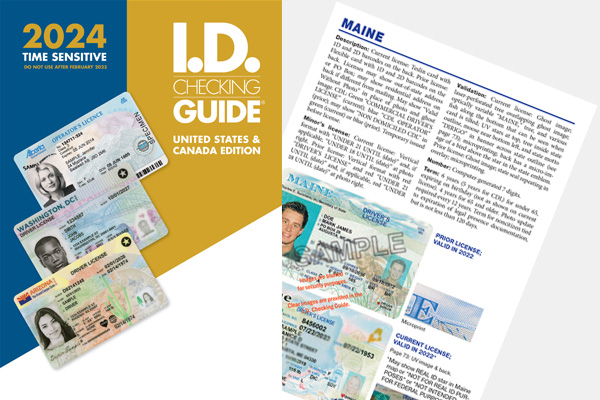

The Need for Accurate ID Verification in Georgia
From busy Atlanta nightlife districts to small-town retailers, Georgia faces significant challenges when it comes to fraudulent IDs. Counterfeit and borrowed IDs are frequently used by underage individuals seeking alcohol, by criminals attempting financial fraud, and by those trying to misrepresent themselves at restricted facilities. Georgia businesses and agencies need reliable tools to verify identification and protect their communities.
Read More
The I.D. Checking Guide (U.S. and Canada) has been the trusted solution for more than 50 years. It gives professionals across the state—from restaurants and bars to banks and government agencies—the ability to compare IDs quickly and confidently. Verifying that an ID is genuine and corresponds to the person presenting it is not just best practice. In many sectors, it is required by law to safeguard compliance, reduce liability, and protect reputations.
How the I.D. Checking Guide Supports Georgia Professionals
Fake IDs may appear convincing at first glance, but they rarely hold up under close examination against the standards documented in the I.D. Checking Guide (U.S. and Canada).
The Guide equips Georgia professionals with:
- Actual-size samples of licenses and ID cards.
- Detailed descriptions of security features such as holograms, ghost images, and microprinting.
- Formatting guidelines for number sequences and expiration layouts.
- Updates on new designs and reissued formats.
With these tools, businesses and agencies can make fast, informed decisions that help them comply with Georgia's laws and avoid costly mistakes.
What the Guide Helps You Verify
The I.D. Checking Guide (U.S. and Canada) allows users to compare IDs in hand with the trusted details it provides:
- Minor's licenses: Orientation, color cues, and clear indicators of the date a cardholder turns 18 or 21.
- Description: Information on physical characteristics and format variations, including commercial driver's licenses.
- Security features: Explanations of ultraviolet markings, tactile elements, and embedded design elements.
- Number formatting: License number structures unique to Georgia, plus comparisons with other states and Canadian provinces.
- Expiration and terms: How long a license remains valid and what renewal timelines look like.
- State-issued IDs: Complete coverage of every Georgia-issued ID, plus samples from all 50 states, U.S. territories, and Canadian provinces and territories.
Understanding the Types of Fake IDs in Use
Fraudulent IDs in Georgia generally fall into a few common categories, each with significant risks. One widespread tactic is the use of altered or borrowed IDs. In these cases, minors may modify birthdates or use an older sibling's license in an attempt to purchase alcohol or enter age-restricted venues.
While the card itself might be genuine, the information no longer reflects the true identity of the person presenting it, making verification essential.
Another challenge comes from look-alike forgeries. These IDs are designed to mimic Georgia's official cards but fail to replicate critical embedded security features such as ghost images, UV elements, or microprinting. At a quick glance, they may appear real, but they lack the protections built into legitimate documents.
The I.D. Checking Guide (U.S. and Canada) helps Georgia professionals recognize both altered and look-alike IDs by providing visual comparisons and detailed security references. With this resource, businesses and agencies can reduce liability, comply with state laws, and protect themselves against fraud.
Industries in Georgia That Rely on the I.D. Checking Guide
Law Enforcement
Officers rely on accurate ID verification during traffic stops, DUI checks, and fraud investigations.
Financial Institutions
Banks and credit unions depend on ID checks to confirm identity, prevent account fraud, and meet compliance standards.
Retail and Hospitality
Bars, restaurants, and convenience stores must confirm age before selling alcohol. Failure to do so can result in severe fines and penalties.
Government Agencies
Agencies issuing licenses, benefits, or permits need accurate ID verification to maintain trust and comply with Georgia law.
Hiring Departments
Employers must confirm employee identity and work authorization, making reliable ID verification a core part of HR processes.
Alcohol Sales & Service Guidelines for Georgia
- Minimum age to consume: 21 - Minimum age to serve: 18 - Minimum age to bartend: 18 - A manager or supervisor must be present when an underage person is serving or dispensing alcoholic beverages.
Alcohol retailers may seize apparently false IDs without fear of prosecution even if the identification is valid.
A person under 21 may not purchase alcoholic beverages as part of a law enforcement action.
Penalties for serving or selling to a minor: In Georgia, the penalty for selling or serving alcohol to a minor can range from $50–$2,500 in fines and/or license suspension or revocation, depending on the circumstances and the number of previous offenses. The court has discretion over the fine amount.
Businesses that sell alcohol, such as bars, restaurants, and liquor stores, are required to check IDs to ensure that customers are over 21. If they sell alcohol to a minor who is then driving, they may face criminal penalties and be held liable for any injuries that result from an accident.
In addition to fines, convicted individuals may also be required to perform community service or other services, and placed on probation. In some cases, the minor's parents may also file a civil lawsuit against the defendant.


FAQs About Spotting Fake Georgia IDs
Why is ID verification so important in Georgia?
With its mix of tourism, universities, and nightlife, Georgia faces consistent risks from fake IDs. Verifying IDs helps prevent underage drinking, financial fraud, and access to restricted areas.
How does the I.D. Checking Guide help Georgia professionals?
It provides actual-size samples and detailed notes on every state and Canadian province/territory, showing security features and number formats that make identifying potential fakes easier.
Who benefits from using the Guide in Georgia?
Bartenders, retailers, law enforcement, banks, HR staff, and government agencies all rely on the Guide to ensure accurate ID verification.
What happens if a business serves alcohol to a minor in Georgia?
Businesses may face steep fines, suspension or loss of their liquor license, and even criminal liability for employees involved in serving underage customers.
Can the Guide help identify borrowed IDs?
Yes. By reviewing cardholder characteristics, license orientation, and embedded security features, professionals can recognize when an ID is being used by someone other than the rightful owner.
Defend Your Business with Trusted ID Verification Tools
Georgia businesses and agencies cannot afford the risks that come with accepting fake IDs. Whether it's protecting against financial fraud, staying compliant with alcohol laws, or ensuring safe access control, the I.D. Checking Guide (U.S. and Canada) is the most trusted resource available.
Order today and give your team the tools to verify IDs with confidence. With more than 50 years of trusted use nationwide, the I.D. Checking Guide (U.S. and Canada) helps Georgia professionals stop fraud before it starts.
How to Spot a Fake Georgia ID
For law enforcement officers, bank tellers, car rental agents, human resources professionals and others who must verify ID in a professional capacity, the recent surge in fake IDs is challenging. The liability and losses that result from accepting a fake ID are large. The I.D. Checking Guide assists in the ID verification process by showing what an actual, valid ID looks like at full-size, and highlights the details of the licenses, making it much easier to spot the fraud. Before approving an expensive car rental, opening a new bank account or hiring a new employee, make sure the driver’s license or ID card has the correct numbering, UV, microprint, ghost images, expiration, and other details that counterfeiters often miss.

Markets Served

Financial Services

Alcohol Control

Government

Law Enforcement
What the I.D. Checking Guide Includes:
- A full page or more for each U.S. state and Canadian province, showing driver’s licenses and ID cards.
- Security image information for ghost images, laser perforation, microprint, UV and other validation details.
- Explanation of what the proper alphanumeric sequencing of a Georgia ID or Driver’s License should be (how many letters, numbers, etc.).
- U.S. Federal documents including immigration, military ID, Visas and passport cards.
- “How to check driver’s licenses” techniques for training.